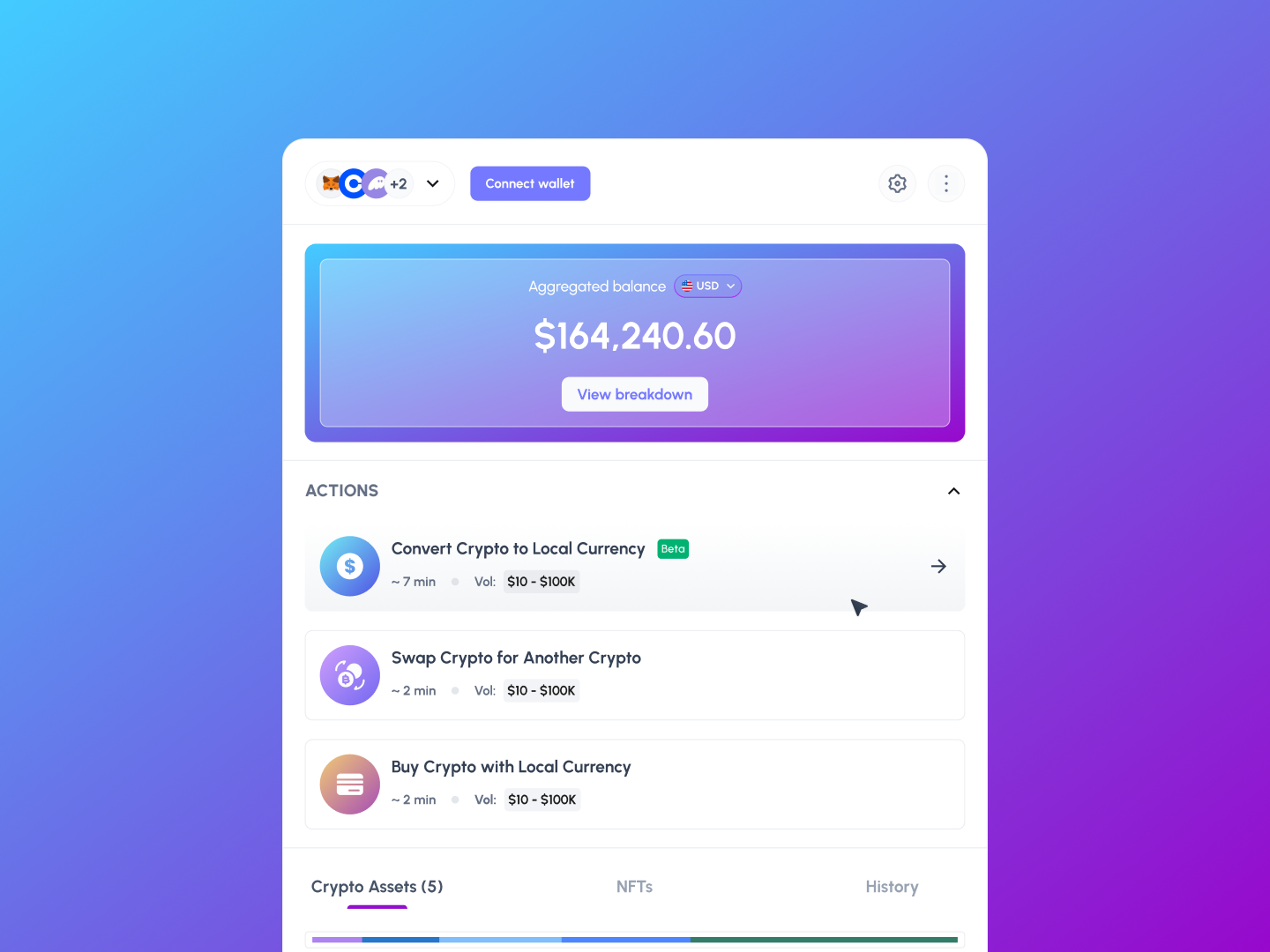
Right now, using different blockchains is like having to carry different currencies for different stores and manually exchanging them at the door. The average person shouldn't need to understand cross-chain bridges or gas fees to use blockchain apps—they should just work.
Chain abstraction is basically making it dead simple for users to pay for stuff on the blockchain without having to think about which chain they're using or what tokens they have. Imagine walking into a store and being able to pay with whatever you've got in your pocket—cash, credit card, or even foreign currency—and the store just handles it without you having to worry about the details.
In crypto terms, if you want to pay for something with ETH but the app runs on Solana, chain abstraction handles all the messy conversion stuff in the background. You don't need to manually bridge tokens or switch networks—you just click "pay" and the system figures out the rest.
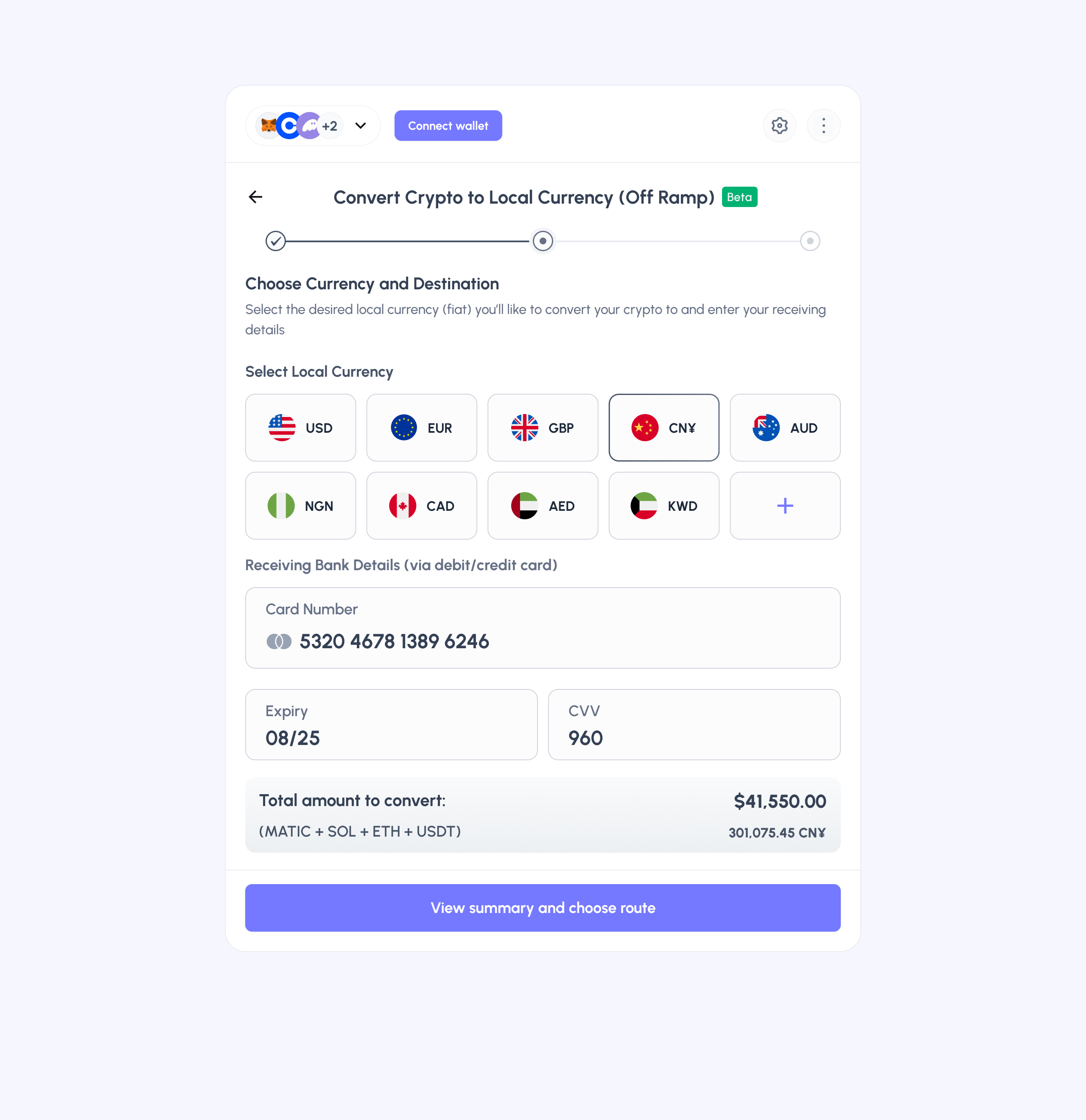
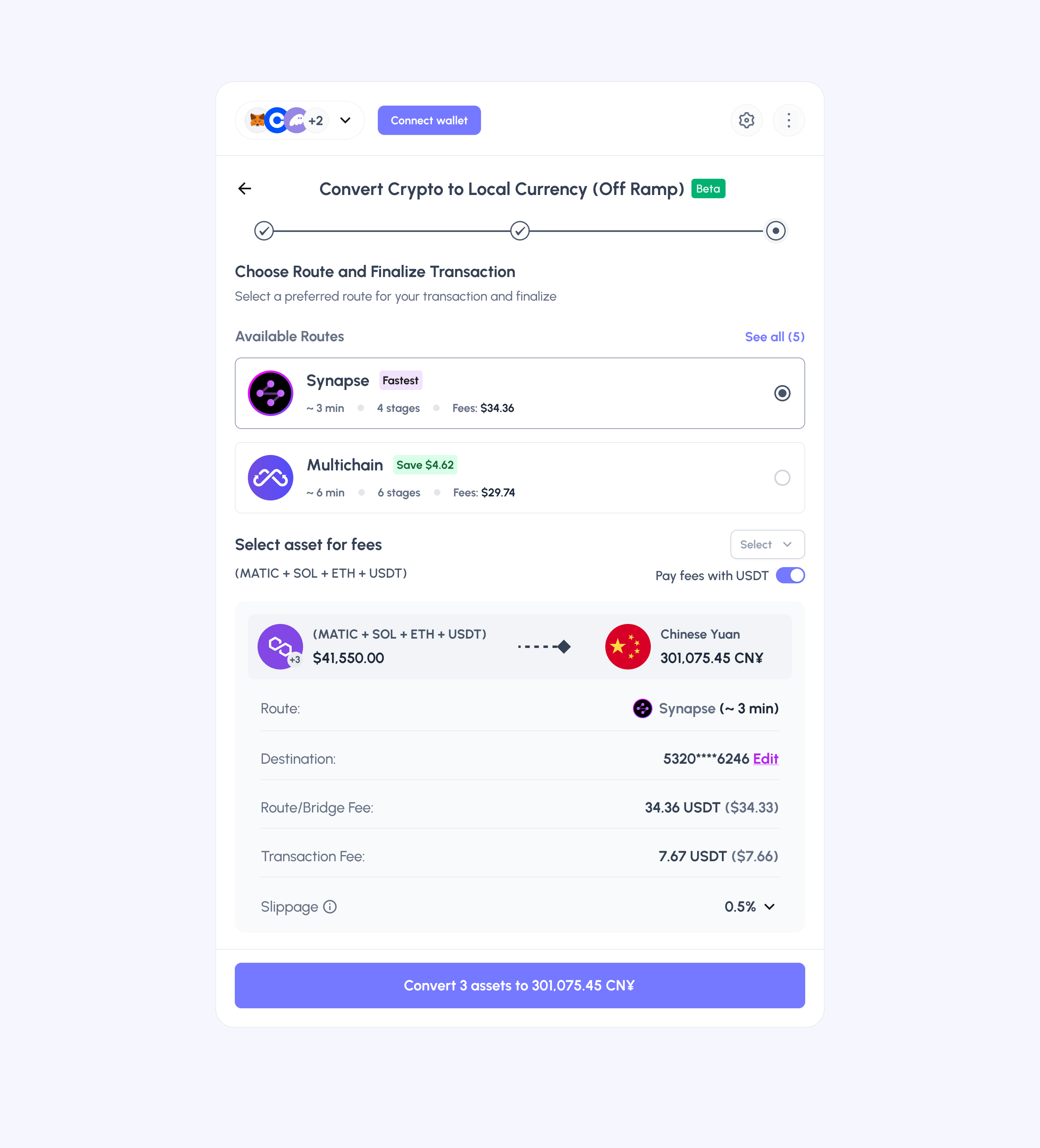
We designed a step-by-step payment flow that abstracts away the technical complexities, keeping the interface simple and focused entirely on the user's intent:
- Connect Wallet — Connect any Web3 wallet across different networks in a single step.
- Overview Dashboard — A clean display of total holdings across all networks without fragmenting balances.
- Choose Assets & Convert — Select which tokens from different chains you want to convert or use.
- Currency & Destination — Set the destination address and choice of output token.
- Route Selection & Finalize — Confirm the most cost-effective path and sign to complete the transaction.
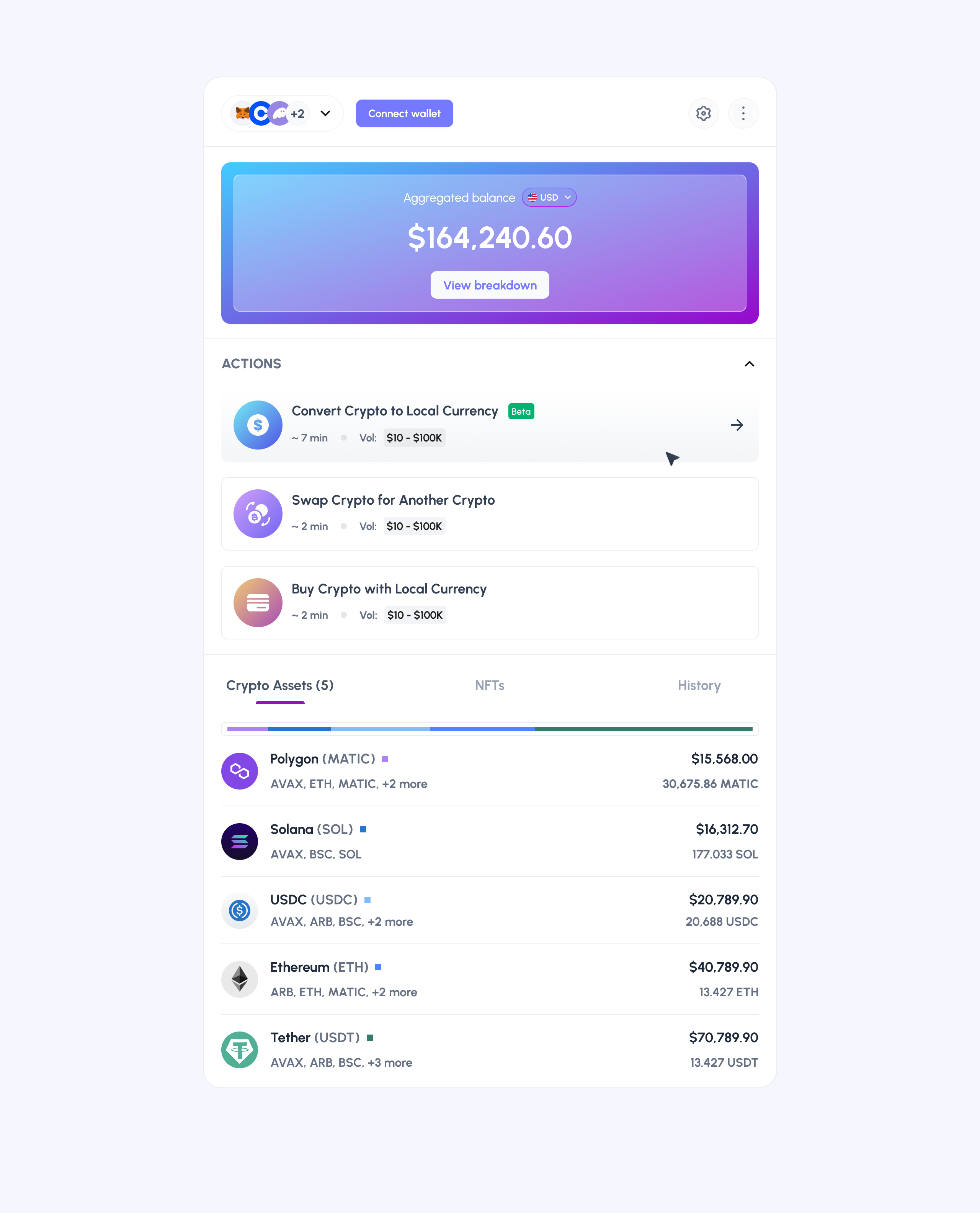
Dashboard Overview — Global display of aggregate wallet balances across all networks without fragmenting by chain.
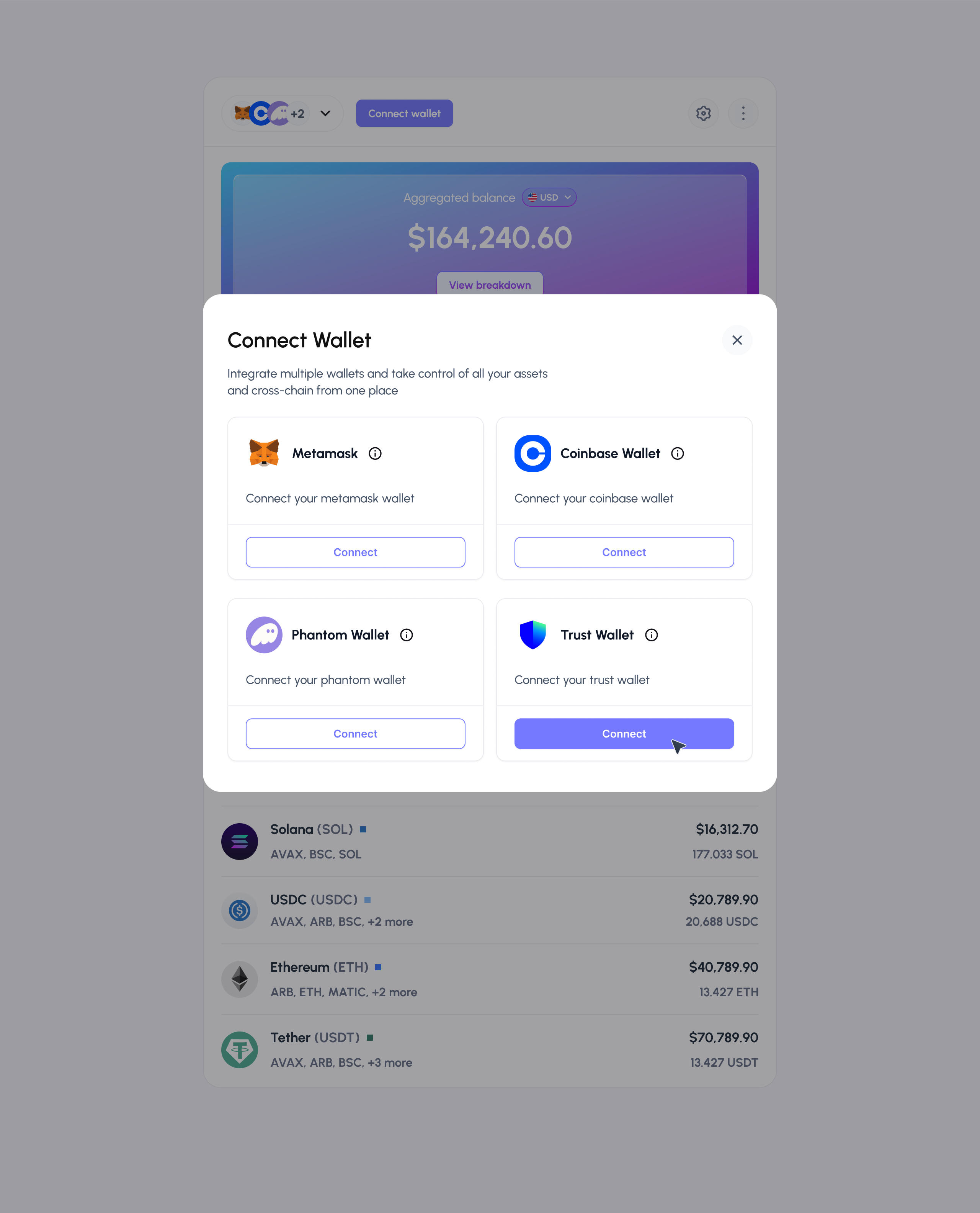
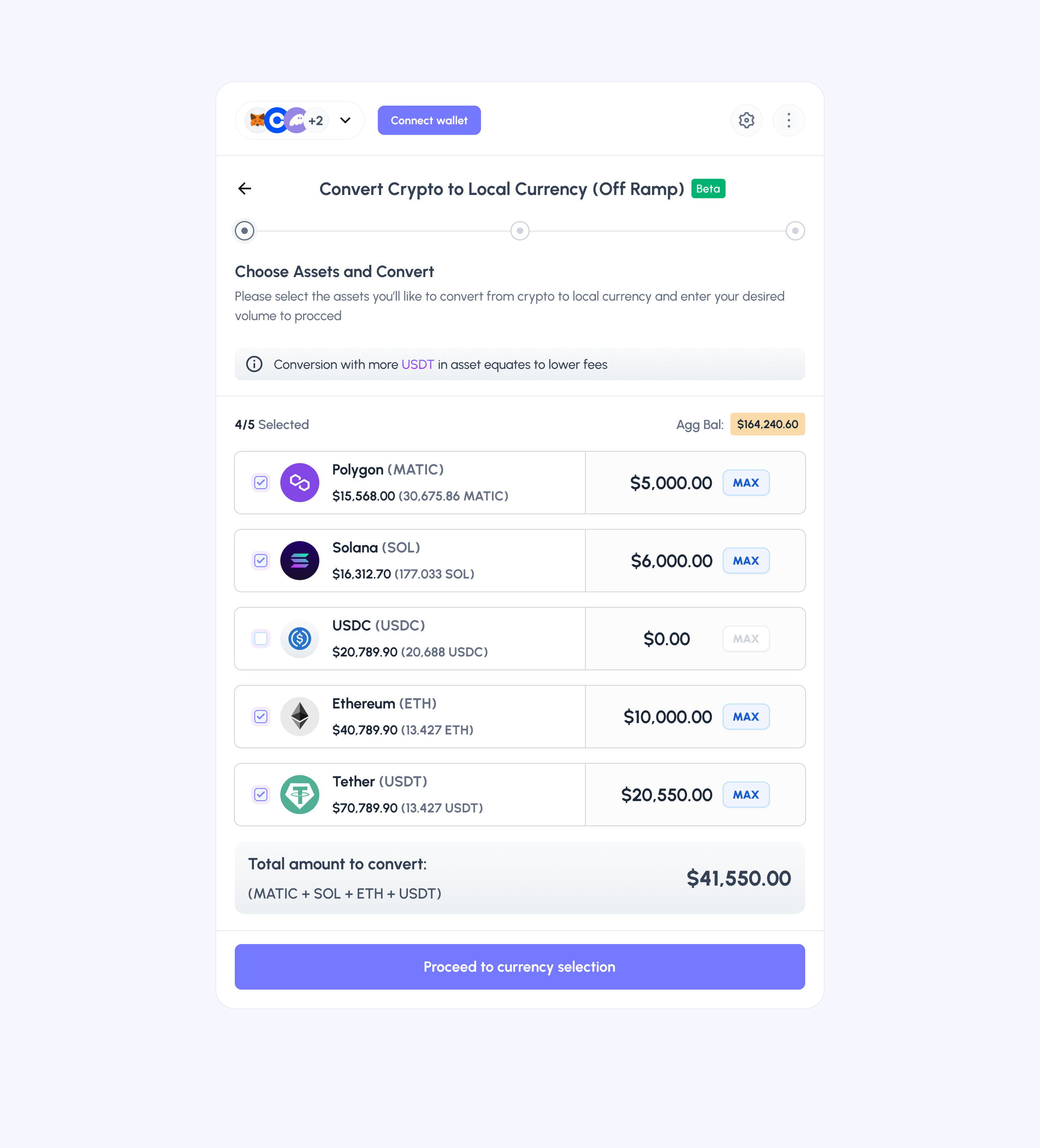
Connect Wallet — A unified connection dialog supporting multi-chain address resolution.
Web3 UX represents one of the largest friction points for mainstream adoption. By removing the need for manual bridging and gas fee complexity, chain abstraction changes the paradigm of crypto interactions.
This exploration was a deep-dive into simplifying transaction states, managing latency transparency, and building a user experience that prioritizes user intent over protocol mechanics.